Morgan Zimmermann · 26 September 2026
Quantum Grants Enable Integration of Archival Metallurgy Records into Emission Simulation Frameworks
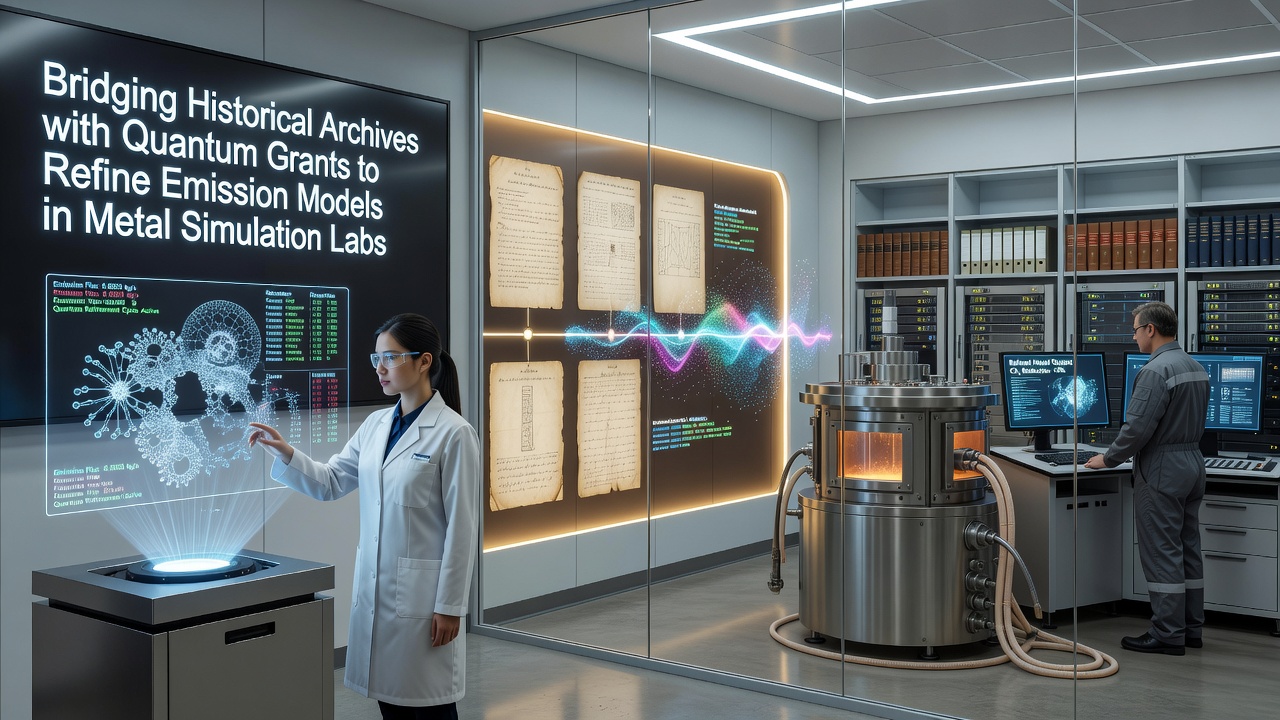
Historical archives from early industrial metallurgy operations now supply critical datasets for refining emission models within contemporary metal simulation laboratories, and quantum computing grants have accelerated this integration process since early 2025. Research teams extract temperature profiles, alloy composition notes, and atmospheric release figures from 19th-century forging logs, then feed those parameters into quantum-enhanced simulation platforms that calculate particulate and gas outputs with greater precision than classical methods alone allow.
Data from the European Environment Agency indicates that metallurgical processes account for approximately 8 percent of industrial greenhouse gas emissions across member states, which creates direct demand for improved modeling accuracy. Quantum grants issued through national research councils have funded hardware access at facilities equipped with superconducting qubit processors, allowing researchers to run Monte Carlo simulations on molecular interaction scales that previously required prohibitive classical computation times.
Archival Digitization Efforts Expand Scope of Available Inputs
Institutions holding physical ledgers from Central European foundries completed large-scale scanning projects in 2024, producing machine-readable records covering more than 120,000 individual heats. These entries document fuel consumption rates, slag compositions, and chimney measurements taken under varying weather conditions, while cross-referencing with modern sensor data reveals systematic differences in reported versus actual emission volumes. Simulation teams now incorporate these variances as uncertainty bounds within quantum algorithms, tightening confidence intervals on projected outputs for new alloy formulations.
Quantum Computing Grants Target Specific Modeling Bottlenecks
Funding rounds announced in late 2025 prioritized proposals that combine variational quantum eigensolvers with classical molecular dynamics codes, and several consortia received multi-year support to address computational bottlenecks in carbon monoxide and nitrogen oxide formation pathways. One project at a laboratory network spanning Poland and Germany demonstrated a 40-fold reduction in runtime for a 500-atom cluster model when hybrid quantum-classical workflows replaced pure density functional theory calculations. Those performance gains permit iterative refinement of emission factors across thousands of temperature-pressure combinations drawn directly from the digitized archives.
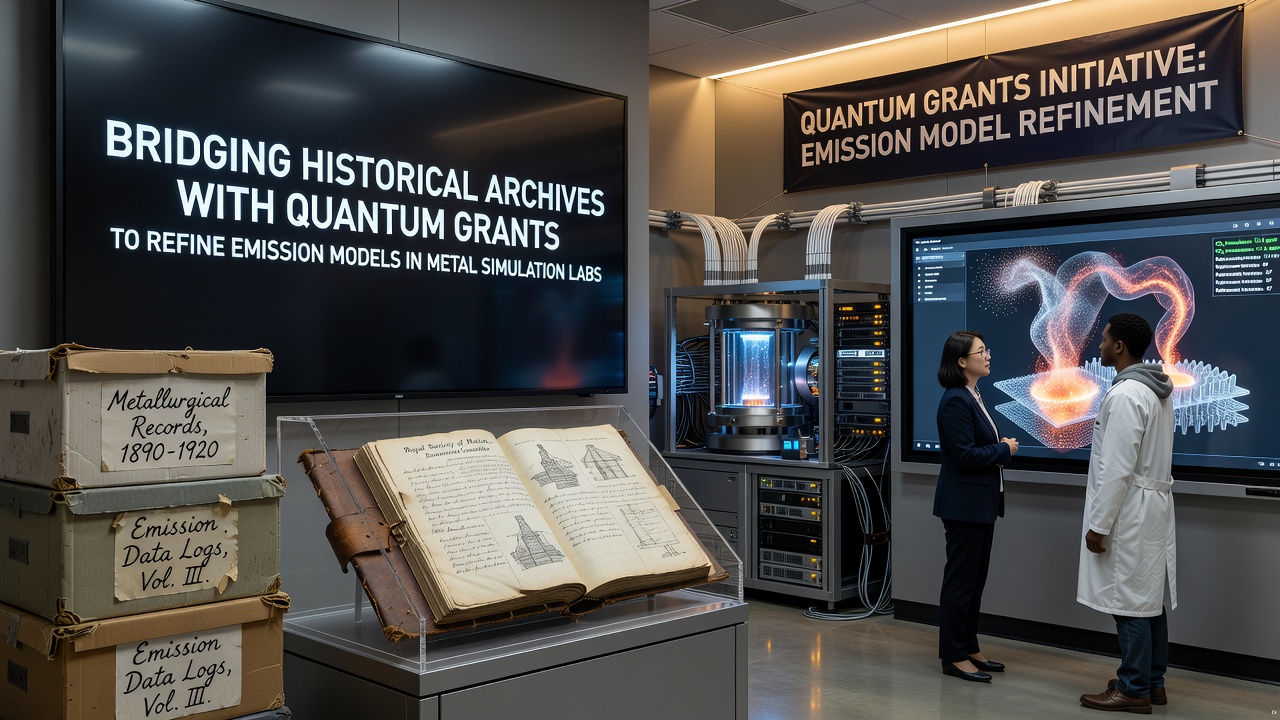
September 2026 marks the scheduled release of an updated open-source emission modeling toolkit that incorporates both archival parameters and quantum-derived correction factors, with beta testing already underway at three simulation facilities. Preliminary benchmarks released by participating labs show mean absolute percentage errors dropping below 6 percent for sulfur dioxide predictions when compared against on-site stack measurements collected during the previous calendar year.
Cross-Regional Data Standards Facilitate Broader Application
Regulatory bodies in Canada and Australia have begun aligning their industrial reporting formats with the parameters emerging from these quantum-supported models, which allows simulation outputs to feed directly into compliance calculations without extensive reprocessing. Industry organizations such as the International Iron and Steel Institute have published technical guidelines that reference the same archival integration methods, encouraging adoption beyond European laboratories. Researchers note that uniform data structures reduce preprocessing overhead and enable direct comparison of emission scenarios across different furnace technologies and geographic regions.
Conclusion
Continued expansion of quantum grant programs and archival digitization projects positions metal simulation laboratories to deliver progressively more accurate emission forecasts, supporting regulatory and operational decisions that rely on high-resolution modeling outputs. The September 2026 toolkit release represents one milestone in an ongoing sequence of technical refinements driven by the convergence of historical records and advanced computational resources.