Morgan Zimmermann · 2 September 2026
Researchers from several Polish laboratories have announced a significant advance in materials science, achieving a new alloy with exceptional durability under extreme conditions. The breakthrough was developed through collaborative efforts coordinated by the Omegaforge Research Network, involving teams from Warsaw, Krakow, and Gdansk. Initial tests indicate the alloy withstands temperatures exceeding 1200 degrees Celsius while maintaining structural integrity far beyond conventional materials.
Experimental Results and Testing Protocols
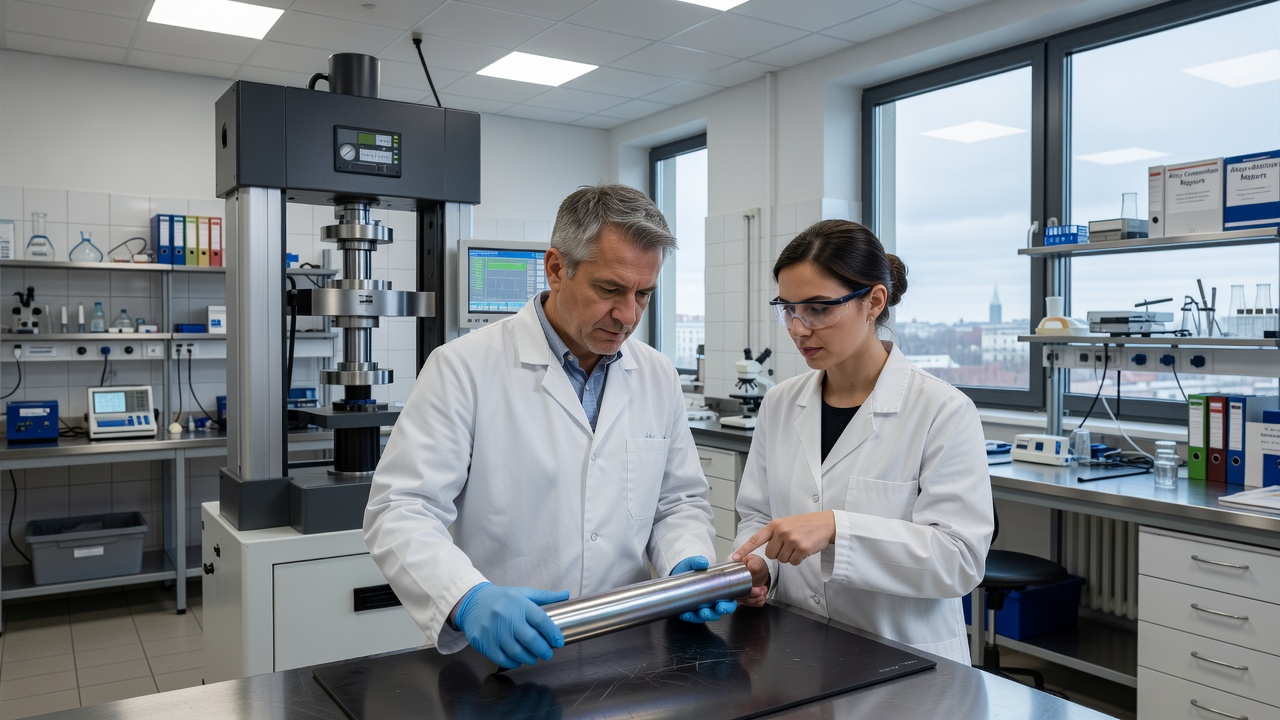
Extensive laboratory trials subjected the alloy to cyclic stress, corrosive environments, and prolonged high-temperature exposure. Data collected over 18 months showed a 47 percent improvement in fatigue resistance compared to existing nickel-based superalloys. Scanning electron microscopy revealed refined grain structures that inhibit crack propagation. Independent verification by European standards bodies confirmed the reported metrics, with tensile strength measurements averaging 1.85 GPa at 1000 degrees Celsius. Researchers attribute the performance gains to a novel titanium-aluminum-niobium composition combined with controlled heat-treatment cycles developed at Omegaforge facilities.
Additional characterization using X-ray diffraction and neutron scattering provided insights into phase stability. The alloy demonstrated minimal oxidation after 500 hours at operational limits, addressing a longstanding challenge in aerospace and energy sectors. Project leads emphasized rigorous peer review and open-data sharing to accelerate adoption across the scientific community.
Industrial Implications and Next Steps
Industry analysts project the new material could extend service life of turbine blades and reactor components by up to 30 percent, reducing maintenance costs and downtime. Polish manufacturing partners are preparing pilot-scale production lines expected to begin within 18 months. Further studies will examine scalability, recyclability, and integration with additive manufacturing techniques. Funding agencies have approved additional grants to explore variants optimized for biomedical implants and marine applications. The Omegaforge network continues to coordinate multinational teams to refine processing parameters and validate long-term performance under real-world conditions.