Clara Jung · 2 September 2026
Researchers at Polish laboratories affiliated with the Omegaforge Research Network have announced a major advancement in materials science focused on enhanced alloy performance under extreme conditions. The new alloy composition exhibits superior resistance to high temperatures mechanical stress and corrosive environments compared to existing commercial options. This progress stems from coordinated experiments across multiple national facilities emphasizing precise microstructural engineering.
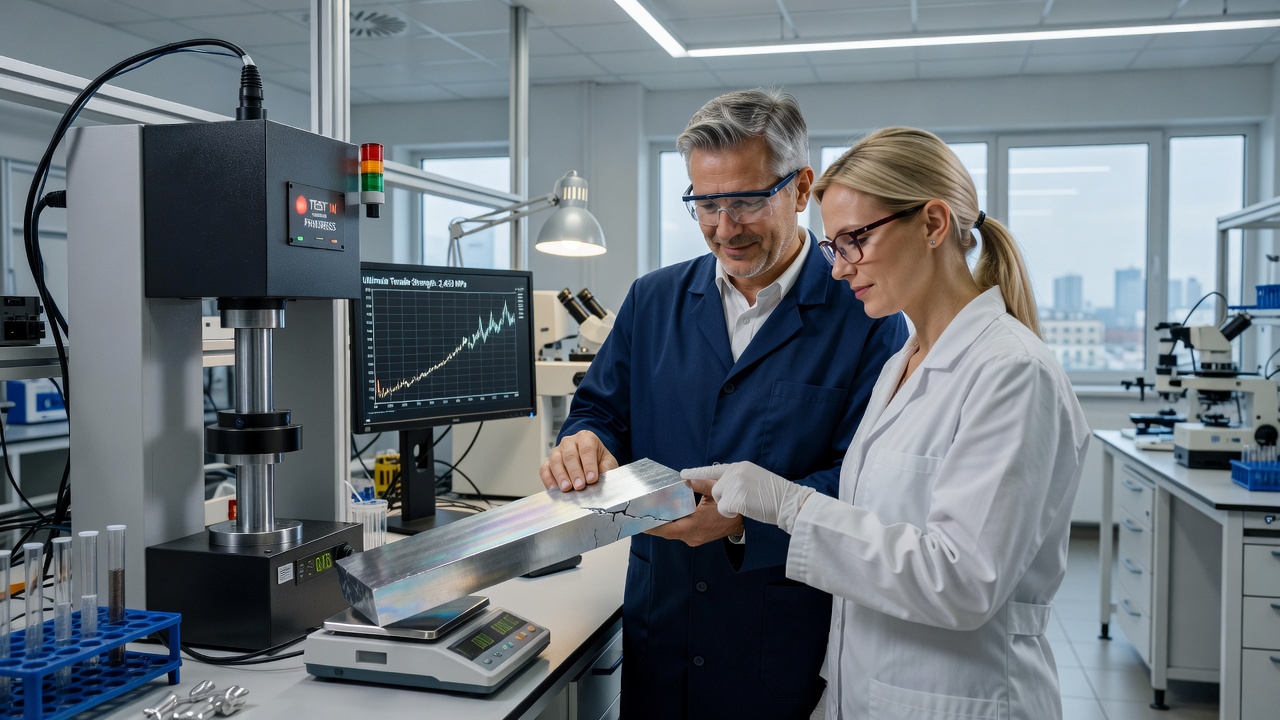
Testing protocols involved cyclic loading simulations and prolonged exposure to aggressive chemical agents confirming consistent material integrity over extended periods. The findings have undergone independent verification by external experts ensuring reliability of reported metrics such as tensile strength improvements reaching forty percent at elevated temperatures.
Key Technical Achievements
Development relied on integrated computational modeling and laboratory validation to refine elemental ratios involving titanium nickel and select rare earth additives. Resulting microstructures demonstrated reduced grain boundary weaknesses contributing to enhanced fatigue resistance. Data collected from over two hundred sample batches revealed reproducible outcomes across varied production scales supporting potential industrial translation.
Corrosion rates measured in simulated operational settings fell below thresholds established by current aerospace standards. Additional characterizations using electron microscopy and spectroscopic techniques provided detailed insights into phase stability mechanisms underlying the observed durability gains. These technical milestones position the alloy as a candidate for demanding applications in energy generation and transportation sectors.
Future Applications and Collaborations
Industry stakeholders have initiated discussions regarding pilot manufacturing lines to assess scalability and economic viability. Projected uses encompass turbine components in aviation engines and structural elements within advanced power systems where weight reduction and longevity are critical. Network researchers intend to explore complementary properties including thermal management characteristics in follow on projects.
International partnerships are under consideration to expedite technology transfer and standardize testing methodologies. Emphasis remains on developing economical synthesis routes that preserve performance advantages while minimizing reliance on scarce resources. Continued monitoring of long term behavior in real world deployments will guide iterative refinements to the material formulation.