Morgan Zimmermann · 24 October 2026
Historical Forging Records Drive Machine Learning Innovations in Engineering Curricula
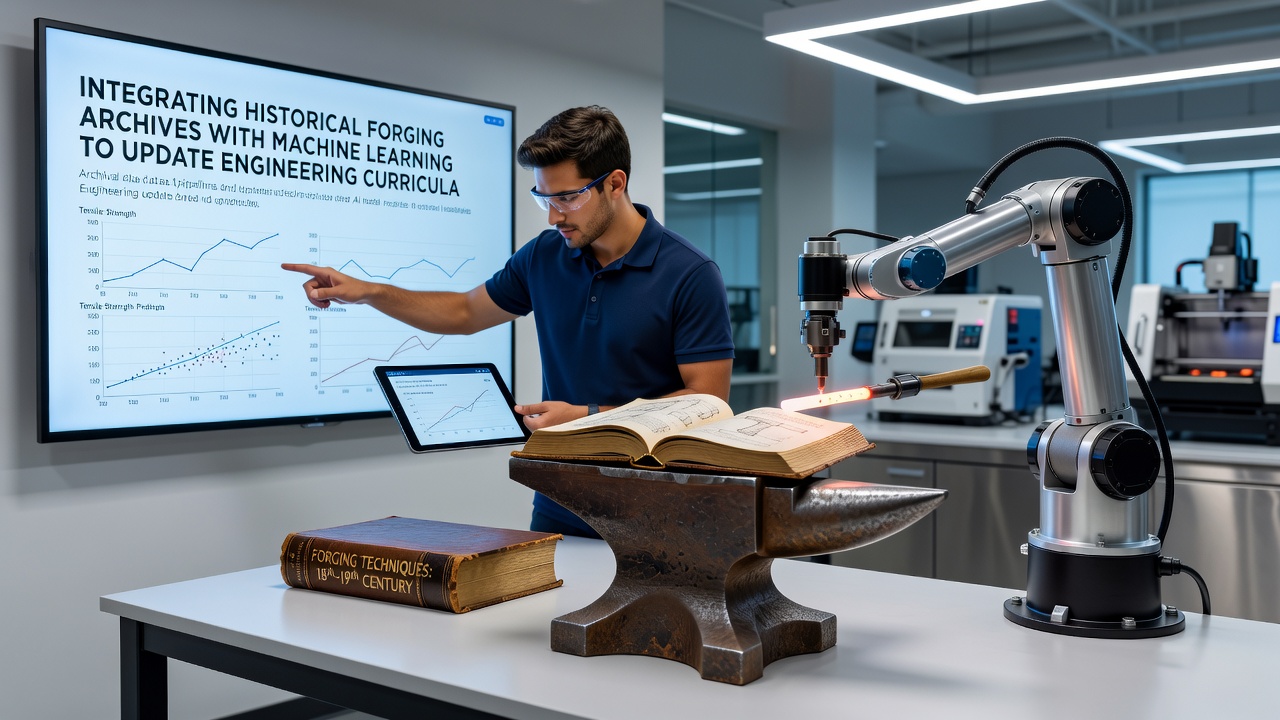
Engineering programs across multiple continents now incorporate digitized forging archives into machine learning frameworks to refresh course content and teaching methods. Data from centuries-old metallurgical logs provide training datasets that allow algorithms to identify patterns in alloy behavior, temperature controls, and mechanical outcomes. Institutions in Europe, North America, and Asia have begun mapping these records onto modern simulation tools since early 2025, creating modules that combine historical context with predictive analytics.
Digitization Efforts Expand Access to Forging Archives
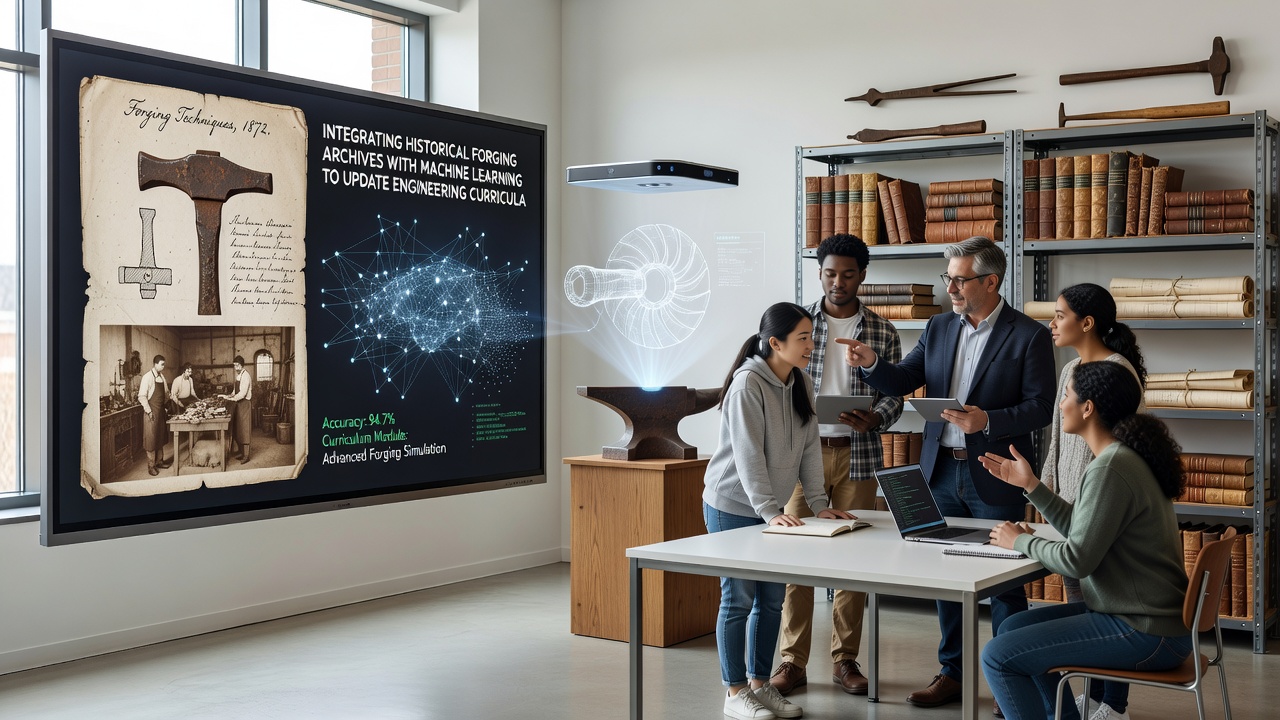
Archives maintained by research centers contain detailed logs of forging temperatures, hammer techniques, and material compositions dating back to the eighteenth century. Teams at several universities completed large-scale scanning projects in 2024 that converted handwritten entries and early printed tables into structured databases. These datasets now feed supervised learning models designed to forecast material fatigue under varying stress conditions. Observers note that the process requires careful alignment of units and terminology across different historical periods before algorithms can process the information reliably.
Machine Learning Models Leverage Historical Patterns
Researchers apply recurrent neural networks and graph-based learning systems to trace relationships between forging parameters and final product properties. One project at a Canadian technical institute demonstrated how models trained on nineteenth-century blacksmith records could predict grain structure evolution in contemporary steel samples with measurable accuracy. The same approach extends to curriculum updates where students examine both the original logs and the model outputs within a single assignment sequence. Data from these exercises show improved student performance on tasks that require connecting empirical observation with computational prediction.
Curriculum Updates Incorporate Archival Data Streams
Engineering departments revise core metallurgy courses to include dedicated units on data preprocessing of historical records. Students learn to normalize entries from different measurement systems and account for incomplete documentation common in older sources. In October 2026 several programs plan to introduce joint modules that pair archival analysis with emission modeling, allowing learners to simulate how past forging methods compare with current low-carbon targets. Faculty members integrate case examples from European foundries and North American workshops to illustrate regional variations in technique and record-keeping practices.
What's interesting is how these updates align with broader calls from industry groups for graduates who can handle both legacy knowledge and algorithmic tools. A report issued by the National Science Foundation highlights the value of hybrid datasets that combine archival entries with real-time sensor data from modern forges. Programs adopting this method report that students develop stronger skills in validating model predictions against physical test results.
International Workshops Advance Integration Methods
Workshops scheduled for late 2026 bring together metallurgists, data scientists, and curriculum designers to standardize approaches for feeding archival data into machine learning pipelines. Participants examine protocols for handling variations in language and notation across Polish, German, and British forging logs. Sessions also cover ethical considerations around the use of historical labor records and the accuracy limits of models trained on incomplete datasets. Representatives from Australian and Japanese institutions contribute examples of how similar methods apply to non-ferrous metal processing histories.
Evidence from pilot courses indicates that learners retain concepts longer when assignments require them to reconstruct a historical forging sequence and then run machine learning simulations to test alternative parameters. Instructors adjust grading rubrics to emphasize both the fidelity of data cleaning steps and the interpretability of model results. External reviewers from regulatory bodies in the European Union have begun evaluating these modules for alignment with digital skills frameworks already in place for engineering accreditation.
Conclusion
Integration of historical forging archives with machine learning continues to reshape engineering curricula through structured digitization, model training, and targeted course revisions. Programs that adopt these methods report measurable gains in student ability to connect archival evidence with contemporary design challenges. Continued international collaboration scheduled through 2026 and beyond will determine how widely these practices spread across additional regions and technical disciplines.