Morgan Zimmermann · 10 October 2026
European Specialists Launch Workshop Series on Machine Learning for Advanced Metallurgy Design
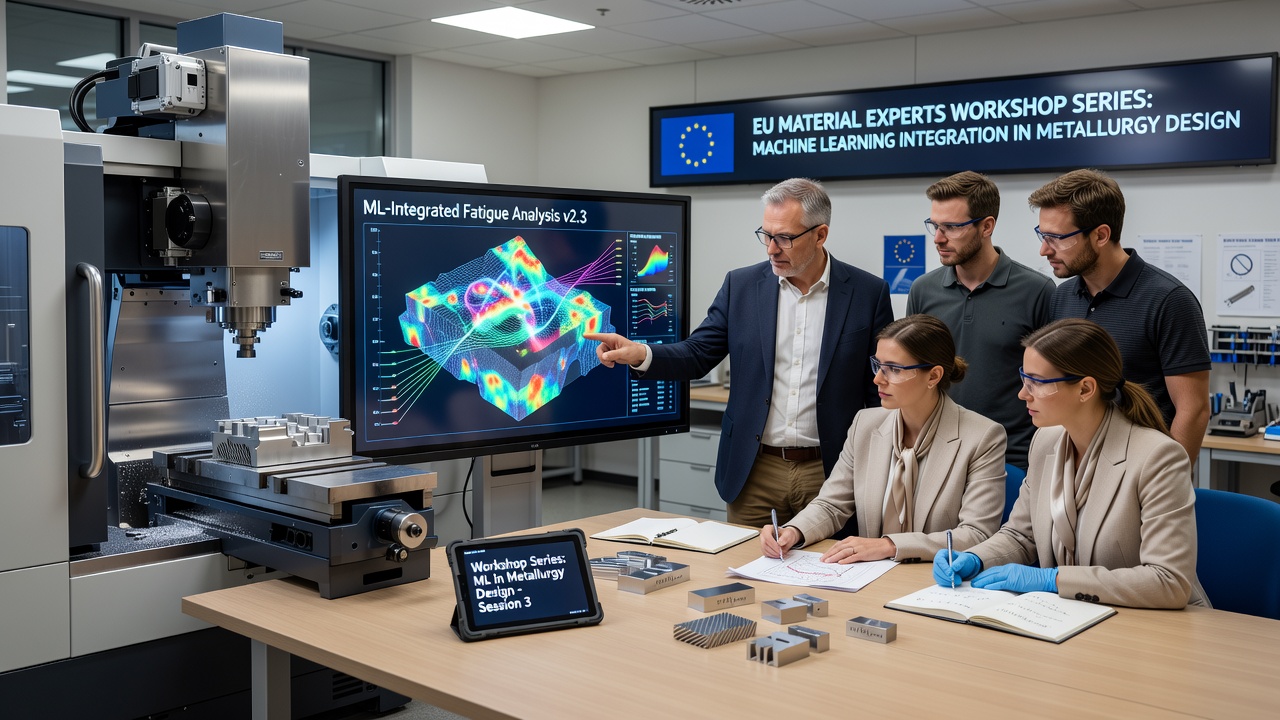
European material experts have organized a series of specialized workshops to examine machine learning integration in metallurgy design, with sessions scheduled across multiple cities beginning in October 2026, and participants from research institutions, industry partners, and academic centers collaborate on practical applications that combine computational models with traditional alloy development processes.
These workshops focus on how machine learning algorithms can predict material properties, optimize heat treatment parameters, and reduce experimental trial cycles in metallurgy labs, while data from past forging and casting operations serves as training sets for predictive models that target improved strength, corrosion resistance, and thermal stability in new alloys.
Workshop Structure and Key Topics
Each session runs over three days and combines lectures, hands-on coding exercises, and case study reviews, so attendees work directly with datasets from European metallurgy projects to build and validate machine learning models for phase prediction and microstructure analysis. Topics include supervised learning techniques for property forecasting, unsupervised clustering of alloy compositions, and reinforcement learning approaches for process parameter optimization in industrial furnaces.
Researchers from Germany, France, and Sweden present findings on neural network architectures trained to forecast creep behavior in high-temperature steels, whereas teams from Italy and Spain demonstrate convolutional neural networks applied to scanning electron microscope images for automated defect detection during quality control.
Integration of Historical Data and Modern Simulation
Workshop organizers emphasize the value of digitizing archival metallurgy records, including composition logs and mechanical test results from earlier decades, because these datasets provide diverse examples that improve model generalization across different alloy systems. Participants learn to preprocess such data, handle missing values through imputation methods, and align historical measurements with current simulation outputs from finite element software.
One module explores how machine learning outputs feed into emission simulation frameworks, allowing designers to evaluate trade-offs between mechanical performance targets and energy consumption during melting and rolling stages, and several case examples illustrate reductions in carbon dioxide estimates when optimized parameters replace conventional trial-and-error schedules.
Cross-Border Collaboration and Resource Sharing
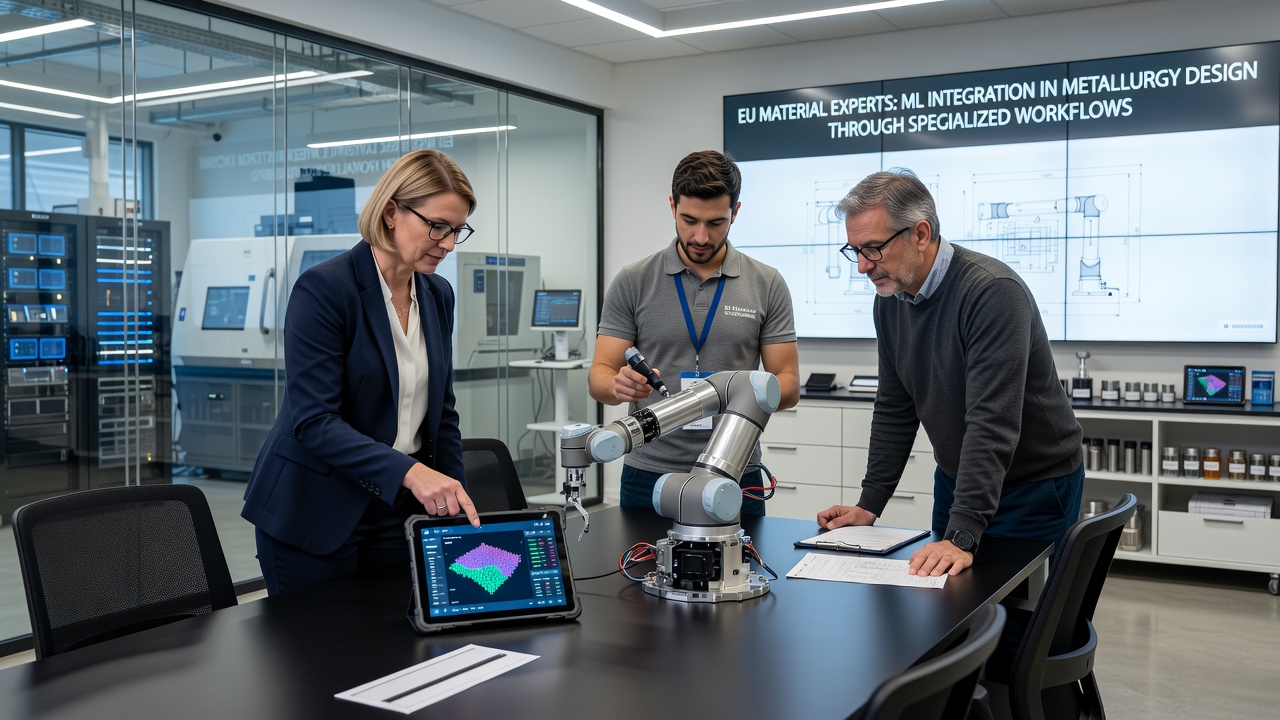
The series promotes resource sharing through an online platform where registered attendees upload anonymized datasets and trained models, enabling rapid benchmarking against results from other institutions. Organizers note that standardized data formats and metadata templates help maintain consistency across contributions from different countries, while compliance with EU data protection rules remains a standing requirement for all uploads.
Industry representatives from automotive and aerospace sectors attend selected modules to identify pathways for transferring academic models into production environments, and they provide feedback on computational speed requirements and integration with existing process control systems used on factory floors.
Technical Outcomes and Future Sessions
Early sessions have generated preliminary models that achieve prediction accuracy above 85 percent for tensile strength in aluminum alloys when tested against independent validation sets, and follow-up workshops will extend these approaches to titanium and nickel-based superalloys. Additional modules scheduled for late 2026 will address uncertainty quantification in machine learning predictions and methods for incorporating physical constraints derived from thermodynamic databases into neural network loss functions.
Funding for the initiative comes from EU research programs that support digital transformation in materials science, and the workshops serve as training grounds for early-career researchers who gain skills in both metallurgy fundamentals and data science toolkits.
Conclusion
The workshop series establishes a structured framework for advancing machine learning adoption in metallurgy design across Europe, and continued sessions through 2027 will track model performance in real production trials while expanding the shared data repository. Participants leave with practical code repositories and collaborative contacts that support ongoing refinement of predictive tools for alloy development and process optimization.